
Retreat Booking Software for Independent Hosts

Retreat booking software should make an independent host’s operation simpler, not give them another system to maintain. The useful kind of “simple” still handles retreat dates, room choices, deposits, payment plans, waivers, guest details and balances. The difference is that those parts work together instead of living across forms, payment links and spreadsheets.
What “simple” retreat booking software should actually mean
Simple software should reduce the number of systems a host has to manage while still covering the workflow specific to retreats. It should make setting up dates and rooms straightforward, keep booking information together, and remove manual hand-offs without importing hotel-scale complexity that the business does not need.
That is the practical standard for retreat booking software. The question is not whether a platform has the shortest feature list. It is whether it can replace the chain of separate tools a host currently uses to sell and manage a retreat.
Retreat-focused systems commonly organise bookings around fixed dates, rooms, deposits, balances and guest details. Hightide’s retreat workflow shows that connected structure in practice.
Start with the booking journey, not the feature list
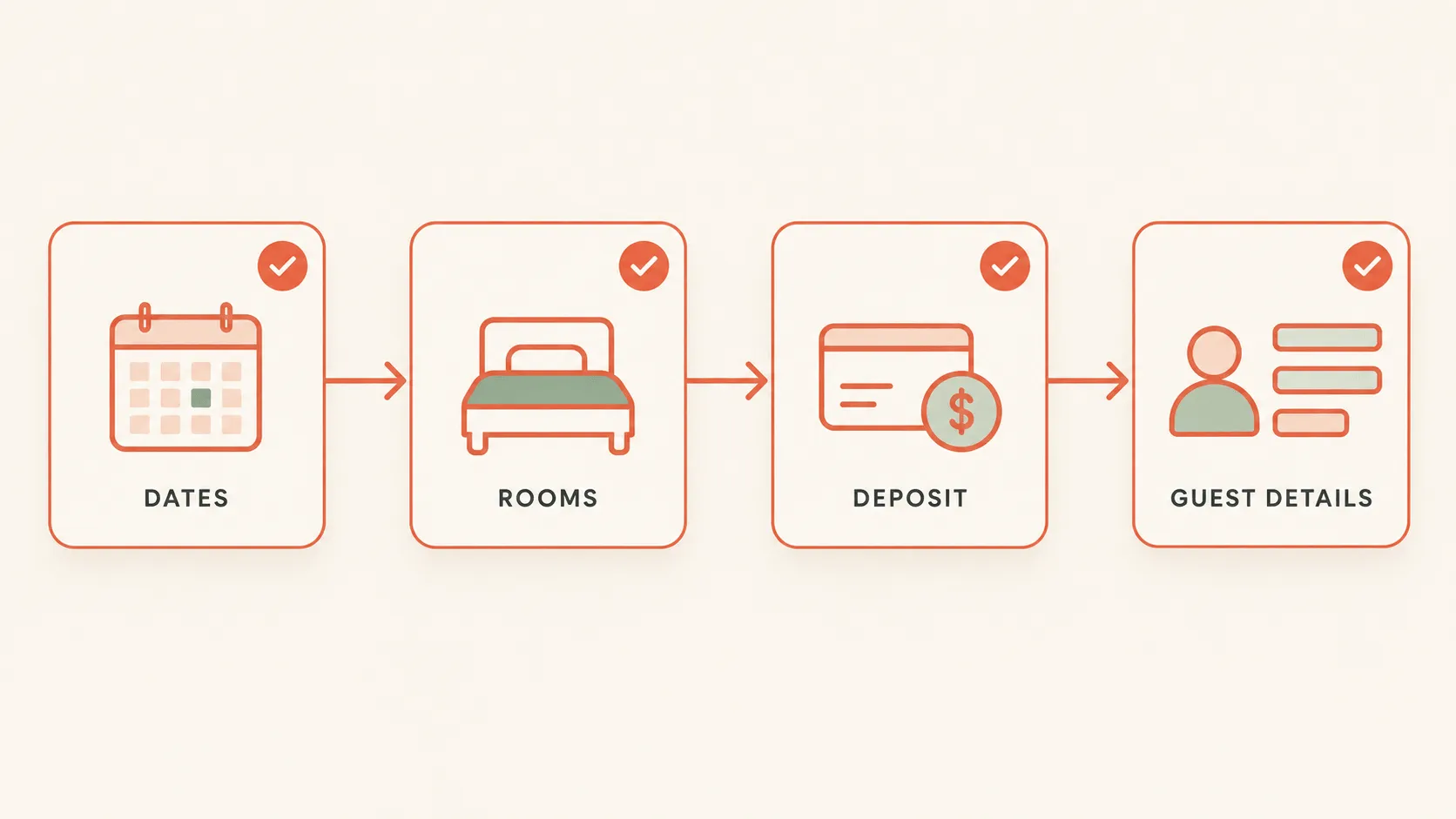
Judge the software by whether it can take someone from a retreat page to a confirmed booking without sending the host into separate tools to finish the job. A useful flow keeps the commercial and guest-information steps connected from the start.
A typical journey should let a guest:
- see the available retreat dates
- choose the right room or place
- pay in full or secure the booking with a deposit
- complete required forms or waivers
- submit the information the host needs before arrival
The host should then see the booking, payment position and guest information in one place. Retreat-specific setup commonly includes lodging, registration, deposits, instalments, waivers and guest questions, as shown in Retreat Guru’s configuration guidance. WeTravel also combines participant booking information with flexible payment plans and manifests.
Gather Software follows the same connected logic. It brings dates, rooms, bookings, payments, deposits, payment plans, waivers and guest information into one branded system instead of making the host stitch those pieces together.
Rooms need to work like retreat rooms, not generic products
Hosts need software that understands how retreat accommodation is actually sold. Shared and private rooms, remaining spaces, different price structures and multiple retreat dates are more specific than selling a standard event ticket.
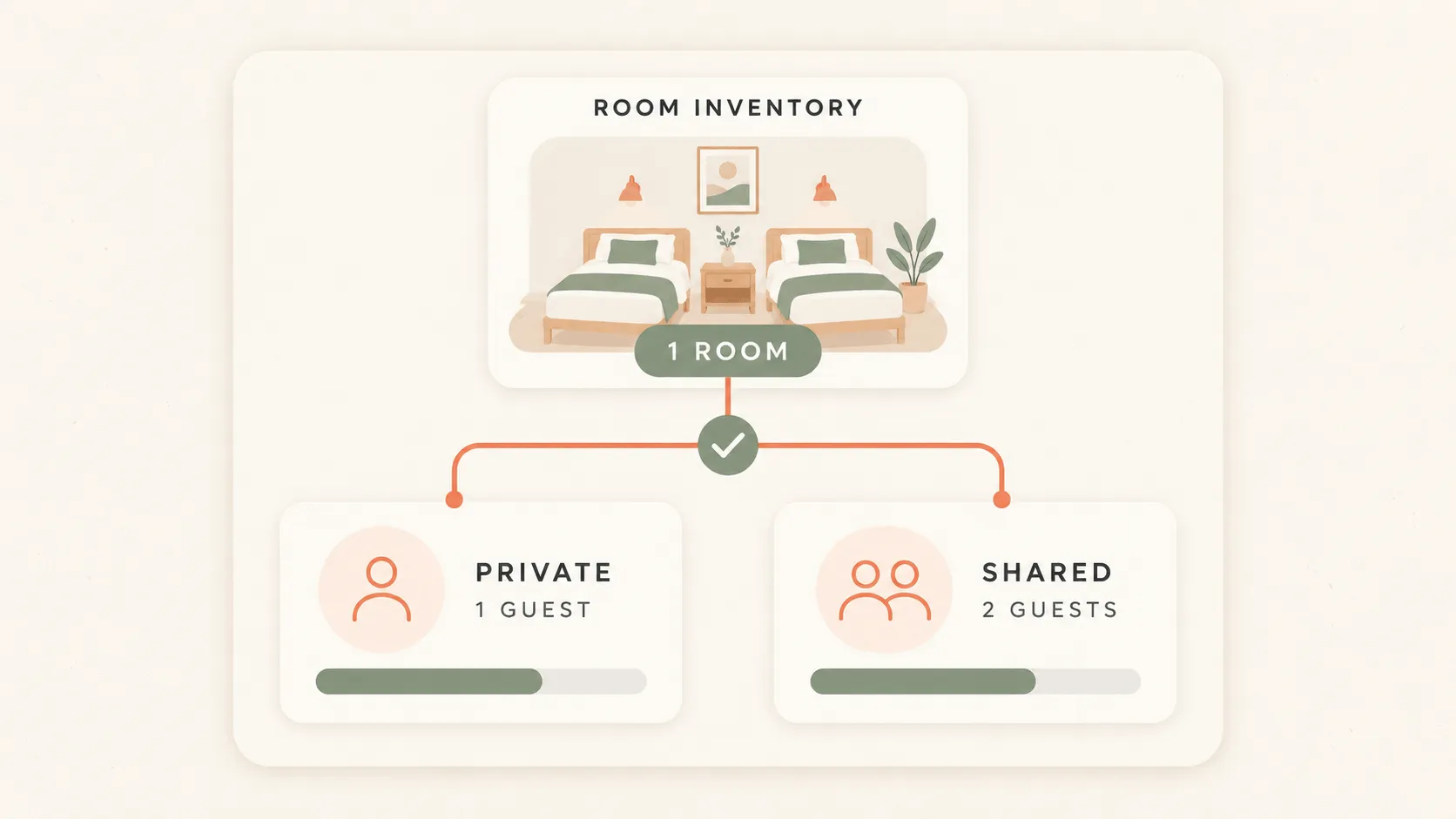
Shared versus private rooms
A host may need to sell individual spaces in one shared room while offering a private-room option elsewhere. The booking system needs to preserve that distinction clearly.
Remaining spaces and availability
Availability should reflect what is actually left to sell. Remaining spaces should stay connected to the booking flow rather than a separate sheet.
Occupancy-based pricing
Pricing can change with occupancy, making retreat room inventory different from a simple ticket quantity.
Multiple retreat dates
The same room structure may need to work across several retreat dates, with sold and remaining spaces visible for each one.
Gather supports shared and private inventory, multiple dates, occupancy-based pricing, and sold or remaining spaces through its retreat room bookings setup. Retreat Guru also describes room types, room blocks and shared real-time availability across programmes in its software overview.
Deposits and payment plans should not create more chasing
Retreat bookings often happen well before the retreat begins, so taking a single payment is only part of the job. Useful software should support deposits, later payments and outstanding balances without forcing the host to rebuild the payment schedule in spreadsheets or send a new link each time money is due.
The key questions are whether the system can collect a deposit, support later payments, show outstanding balances and keep payment status attached to the booking.
Regpack’s retreat registration software combines deposits, scheduled instalments, registration forms, e-signatures and waivers in the registration process. That is the level of connection hosts should look for: payment steps that belong to the booking rather than sitting beside it in another tool.
Guest details, waivers and forms belong in the same flow
A host still has work after someone pays. Contact details, waivers, intake forms, transfer information, dietary needs, trip documents and remaining balances can all matter before arrival. The software should keep those items attached to the person and booking they belong to.
Bookinglayer includes digital waivers plus dietary and transfer details through a customer portal alongside rooms, activities and payments. Gather can similarly keep guest management, waivers, intake and trip information connected through the guest flow and portal.
The benefit is not more data. It is less searching across inboxes, forms and spreadsheets to work out what is still missing.
Your booking software should work with your brand
Hosts should not have to choose between a polished website and a functional booking process. The booking flow should feel like part of the same business, with the host’s domain and brand remaining central from the retreat page through to payment.
Gather can build the host a website around their brand on their own domain, with dates, bookings and payments built in. Hosts who already have a website can also keep it and connect Gather for booking and payment functionality.
The booking system should support the brand rather than force the host to work around a generic third-party flow.
What independent hosts probably do not need
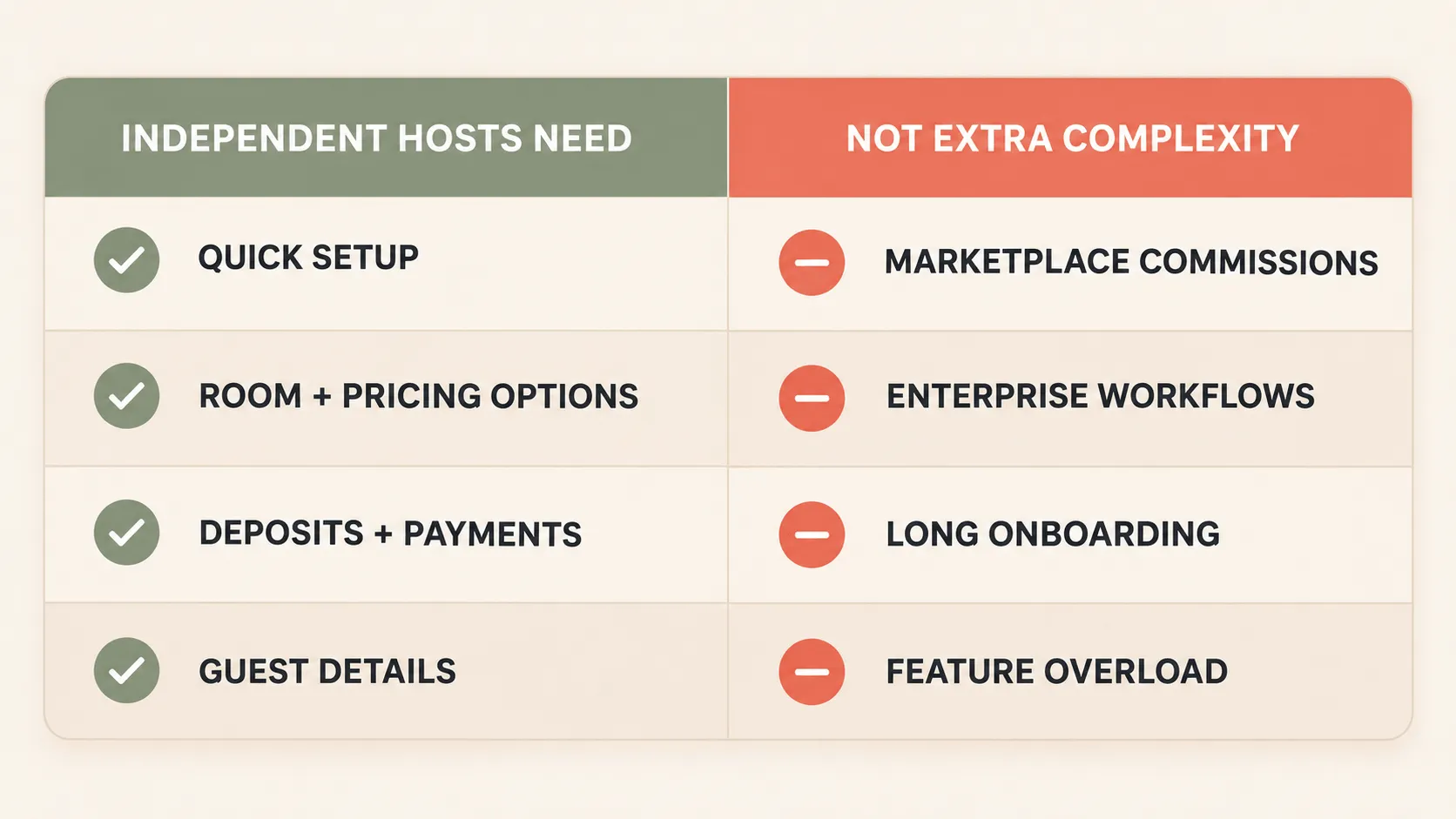
Independent hosts should avoid paying for complexity designed for large hospitality operations unless their business genuinely needs it. A business running several retreats per year has different requirements from a hotel managing hundreds of rooms, housekeeping schedules and large-scale accommodation operations.
That does not mean the software should be basic. It means the complexity should be specific to retreats, such as rooms, deposits, payment plans, waivers and guest details.
Gather Software is designed for independent retreat hosts and smaller retreat centres, not hotel-scale operations requiring hundreds of rooms.
A simple checklist for choosing retreat booking software
A host should be able to answer “yes” to the core workflow questions before comparing secondary features.
- Can guests see retreat dates clearly?
- Can they choose the right room or space?
- Can they pay a deposit or use a payment plan?
- Can waivers and forms stay attached to the booking?
- Can the host see guest details and balances together?
- Does the booking flow match the host’s brand?
- Does the system replace tools rather than add another one?
If cost is part of the comparison, look at what the platform replaces as well as the headline fee. Gather publishes its current Gather pricing as £79 a month or £699 a year, plus 2% per booking, with USD and EUR supported. Exact commercial terms are confirmed on a call and put in writing before signing.
What Independent Retreat Hosts Need vs What They Usually Do Not
Independent hosts usually need
Retreat dates
Shared and private room choices
Deposits and payment plans
Waivers and guest details
Branded booking flow
They usually do not need
Hotel-scale property management
Hundreds-of-room scheduling
Complex accommodation operations
Generic enterprise workflows
Extra tools that duplicate existing work
Simplify the booking stack, not the retreat
If you are still stitching together a website, forms, payment links and spreadsheets, the goal is not another tool. It is fewer moving parts. Gather Software brings your website, retreat dates, rooms, bookings, payments, deposits, payment plans, guest details and waivers into one branded system. It is built for independent retreat hosts and smaller retreat centres that have outgrown manual booking workflows but do not need hotel-scale software.
If you want to see whether Gather can replace the tools you are managing separately, Book a call.
Frequently Asked Questions
See where you are leaving bookings on the table
Book a call and we will tell you honestly whether Gather fits, and what to use if it does not.