
What Is Retreat Management Software? Features, Pricing and How It Works

If you run several retreats a year, what is retreat management software in practical terms? It is software that helps you manage the operational journey around a retreat, from publishing dates and availability to taking bookings, collecting payments, storing guest information and handling pre-arrival tasks. Instead of treating each part as a separate job across forms, payment links and spreadsheets, the software connects them. Exact feature sets vary between providers, but the aim is the same: make the booking and guest-management process easier for the host to run.
What is retreat management software?
Retreat management software helps hosts manage the journey from retreat availability and booking through payment, guest information and pre-arrival tasks. It usually goes further than a basic booking form because it connects workflows that would otherwise sit in separate tools. For a host, that can mean one clearer view of dates, spaces, rooms, balances, forms and guest status.
The category is broad, so there is no universal feature list. Retreat Guru, for example, describes its platform across bookings, rooms and rentals, guest messaging, payments, reporting and wider retreat operations. The useful question is whether a system supports the way your retreats are sold and run.
Gather is one retreat-specific example. Its Software connects a branded website with dates, rooms, bookings, payments, guest management and pre-arrival workflows for independent hosts and smaller centres, rather than hotel-scale property management.
How does retreat management software work?
Retreat management software usually works as a connected sequence. You publish dates and availability, guests choose a retreat or room, payment is collected, guest details are stored, balances and forms are managed, and the host tracks booking and guest status. The value comes from connecting those steps rather than adding another isolated tool.
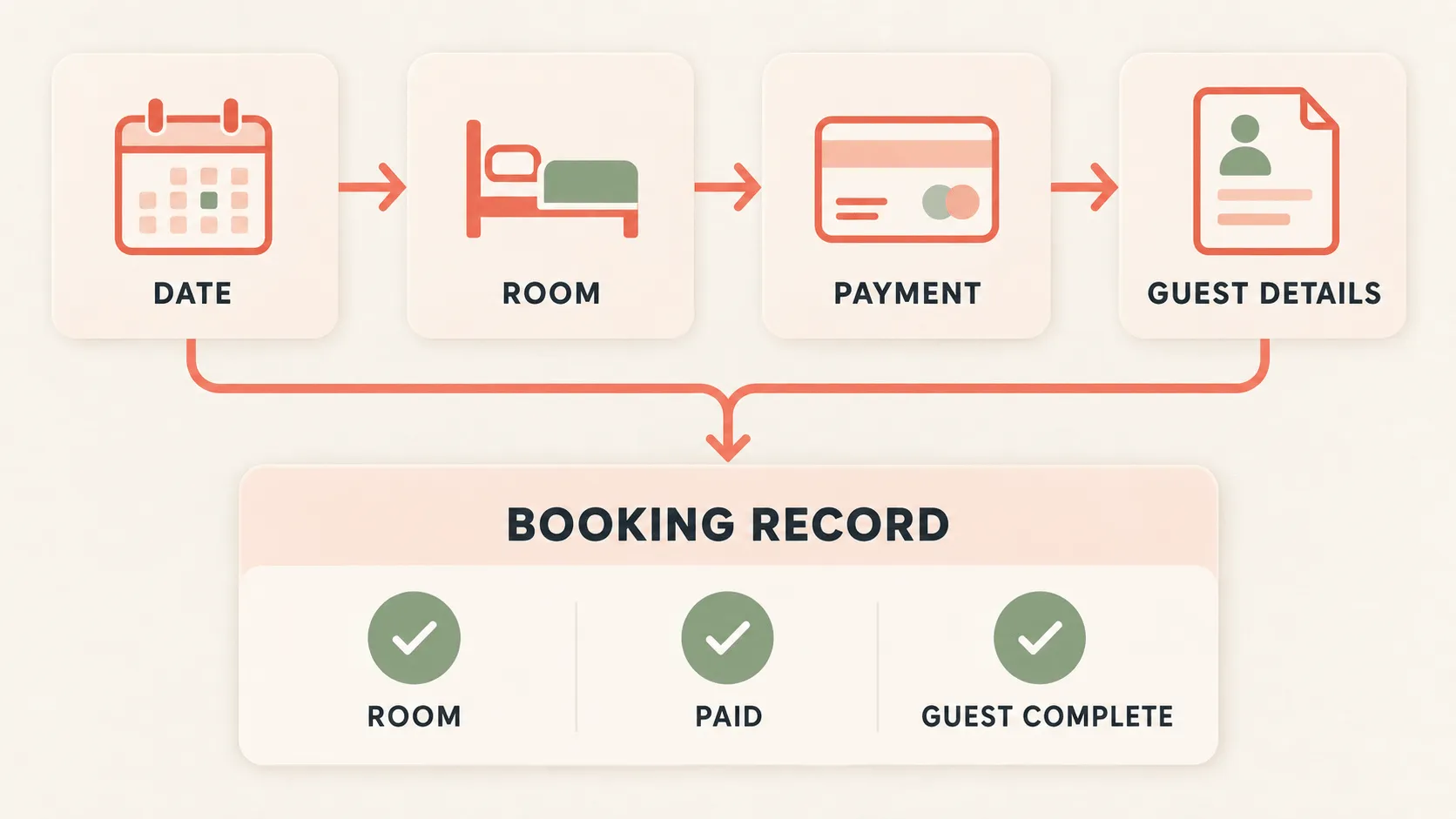
Guest-facing booking flow
The guest-facing side starts with dates, room choices and pricing. A guest selects an option, pays in full or by deposit, and provides the information the host needs. Post-booking tasks can then stay in the same flow, including balances, waivers and forms.
Retreat Guru’s programme configuration, for example, supports dates, pricing, deposits or full payment, registration questions, capacity, waiting lists and automated emails. Deposits can be set as fixed amounts or percentages.
Host-facing management flow
On the host side, each booking should become an organised record showing who booked, what they chose, what they paid and what remains outstanding. As more dates and guests are added, that connected view reduces the need to reconcile spreadsheets, inbox threads and payment records by hand.
What features should retreat management software include?
The most useful retreat management software features are tied to jobs a host actually needs to complete. That usually means managing dates, rooms, payments, guest records, forms, communication and booking visibility. A long generic feature list matters less than whether the system matches the operational flow of your retreats.
Retreat dates and availability
You should be able to publish several retreat dates, control capacity and see what remains available without manually updating a second source of truth.
Room and occupancy management
If guests choose shared or private rooms, or pricing changes with occupancy, room and reservation management should connect room types, multiple dates, sold and remaining spaces, occupancy-based pricing and guest details.
Deposits, payments and payment plans
Retreats are often sold before arrival, so the system may need deposits, staged balances or instalments. WeTravel’s payment plans, for example, can use up to 24 instalments with chosen due dates and amounts, automated reminders and optional automatic billing.
Guest records and CRM
A booking should create a usable guest record with contact details, room choice, payment status and other retreat-specific information, reducing repeated data entry between tools.
Waivers, forms and guest information
Keeping waivers, intake questions and other pre-arrival information connected to each booking makes it easier to see what is complete and what still needs action.
Guest communication and portals
A guest portal can keep balances, forms and trip information in one place. Bookinglayer combines booking, payments and back-office functionality with a customer portal that can handle post-booking payments and waivers.
Reporting and booking visibility
Useful reporting should answer practical questions: how many spaces are sold, which balances are outstanding, which dates are filling and what still needs action before arrival.
Retreat booking software vs retreat management software
Retreat booking software generally focuses on reservations and checkout. Retreat management software usually extends further into rooms, payments, guest records, forms and ongoing operations. Vendors use the terms differently, so compare capabilities against your workflow rather than assuming the product name defines the scope.
A simple booking tool may be enough for a straightforward checkout. Once you introduce several dates, room choices, deposits, instalments or waivers, the difference between taking a booking and managing the retreat becomes clearer. Hosts comparing scope can also review Gather’s retreat software FAQs.
Who needs retreat management software?
Dedicated retreat management software tends to make sense for established independent hosts and smaller retreat centres running several dates, managing different room types, taking deposits or instalments and tracking guest information across multiple tools. The key question is whether the booking workflow now creates repeated manual work.
Signals include updating availability in more than one place, checking payments against a spreadsheet, chasing forms manually, or piecing together guest status from emails, payment records and booking forms.

The goal is not maximum complexity. A smaller centre may need multiple dates, shared and private rooms, occupancy-based pricing and organised guest records without hotel-level scheduling.
What does retreat management software cost?
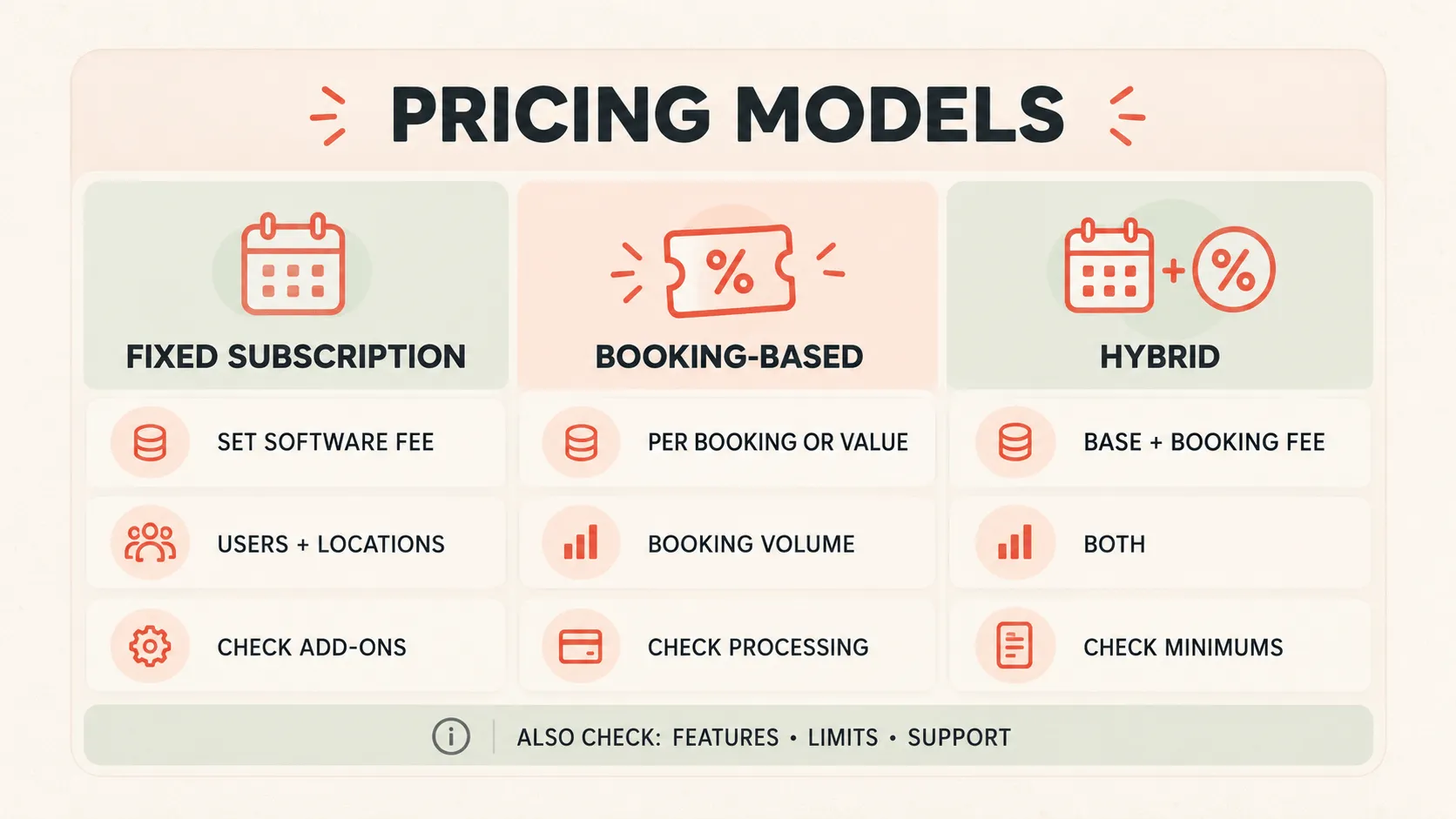
Retreat management software pricing can use fixed subscriptions, booking-based fees, tiered plans or hybrid models. Compare the total cost against what is included, how charges change with booking volume, whether users or locations affect the fee, and whether payment processing is separate.
Common retreat management software pricing models
A fixed subscription charges a set software fee. Booking-based pricing scales with bookings or booking value. Hybrid pricing combines a subscription or minimum fee with a booking-based charge. None is automatically better. Fit depends on your booking volume, included functionality and preferred cost structure.
What affects the price
Providers price around different variables. Bookinglayer uses fixed monthly software pricing, with factors such as users, locations and add-ons affecting cost while payment processing is separate. Retreat Guru’s displayed plans illustrate a hybrid model combining a booking percentage with a monthly minimum. These are vendor examples, not market averages.
Gather’s published retreat software pricing is £79 a month or £699 a year, plus 2% per booking, with USD and EUR supported. Treat that as one transparent real-world structure, then compare what is included against your own booking model.
What to check before choosing a plan
Check user or location limits, included room and guest-management features, payment processing, booking-fee calculations and any add-ons. Compare the likely total at your booking volume, not just the smallest headline monthly figure.
How to choose retreat management software
Choose retreat management software by starting with your actual booking model. The right fit should support your retreat dates, room structure, payment process, guest workflow, brand and scale without adding hotel-level complexity you do not need.
Map your current flow. Follow the journey from publishing a retreat to collecting the final balance and preparing guests for arrival.
Find the broken handoffs. Note where information is copied between forms, spreadsheets, payment tools and email.
Check room logic. Confirm the system fits shared rooms, private rooms, occupancy pricing and multiple dates where needed.
Test payments. Review how deposits, instalments, balances and reminders work for host and guest.
Review guest workflows. Check forms, waivers, guest records and any portal or communication functions you need.
Compare total cost. Include software fees, booking charges, payment processing, limits and add-ons.
A good system should reduce reconciliation. If you still have to move the same booking information between several tools, it has not solved the core operational problem.
Run your retreats without stitching tools together
Retreat management software should make the booking journey easier to run, not give you another system to reconcile with forms, payment links and spreadsheets. Gather Software brings the branded website, dates, rooms, bookings, payments, deposits, payment plans, guest management, waivers and related guest workflows together for established independent hosts and smaller retreat centres that have outgrown disconnected tools without needing hotel-scale property management.
See how Gather could fit your current booking and guest-management setup. Book a call.
Frequently Asked Questions
See where you are leaving bookings on the table
Book a call and we will tell you honestly whether Gather fits, and what to use if it does not.