
How to Plan a Corporate Retreat: Budget, Activities and Guest Management

Learning how to plan a corporate retreat starts with more than choosing activities. For a retreat host, the real work is building an operating plan around the company's objective, expected headcount, budget, accommodation and attendee requirements. Once those constraints are clear, you can design the programme, organise rooms, collect guest information, set payment deadlines and communicate with attendees without rebuilding the process from scratch.
1. Define the retreat objective before planning the itinerary
Before planning sessions or activities, clarify the company's objective, approximate headcount, dates, length of stay, decision-maker and non-negotiables. The purpose of the retreat should shape the rest of the plan. A strategy-focused retreat needs a different schedule, space and activity mix from one centred on connection, recovery or creative thinking.
This is also the point to understand the group profile. Ask who is attending, whether everyone is travelling together, whether senior leaders need separate working space and whether there are accessibility or scheduling requirements that could affect the programme. Cvent's corporate event planning guidance similarly recommends starting with the event objective because stakeholder goals influence later planning decisions.
For the host, the objective becomes a filter. It helps you decide which requests support the retreat and which simply add cost or complexity. It also gives you a clearer basis for building the quote, accommodation plan and schedule.
2. Build a corporate retreat budget that covers the full stay
A corporate retreat budget should account for the full stay, not just accommodation and activities. Scope food, venue or meeting space, facilitators, transport, equipment and contingency alongside rooms. Keep the company's overall event budget separate from your own internal costs and the price you quote as the retreat operator.
That distinction matters because the client's total spend may include costs you do not control. Flights, external transfers, specialist facilitators or off-site activities may sit outside your direct quote, while still affecting what the company can spend with you.
Build your own costing from the services you are responsible for delivering. Corporate event budget guidance from Cvent includes categories such as venue hire, food and drink, accommodation, travel, speakers or facilitators, staffing and service fees. Cvent also recommends allowing a 10 to 15 per cent contingency for costs such as changing headcounts, weather alternatives or extra transfers. Treat that as one planning recommendation rather than a universal rule.
The important part is knowing what is included, what is optional and what happens if the scope changes. That makes the commercial conversation clearer before rooms, suppliers or facilitators are committed.
3. Confirm accommodation and room requirements early
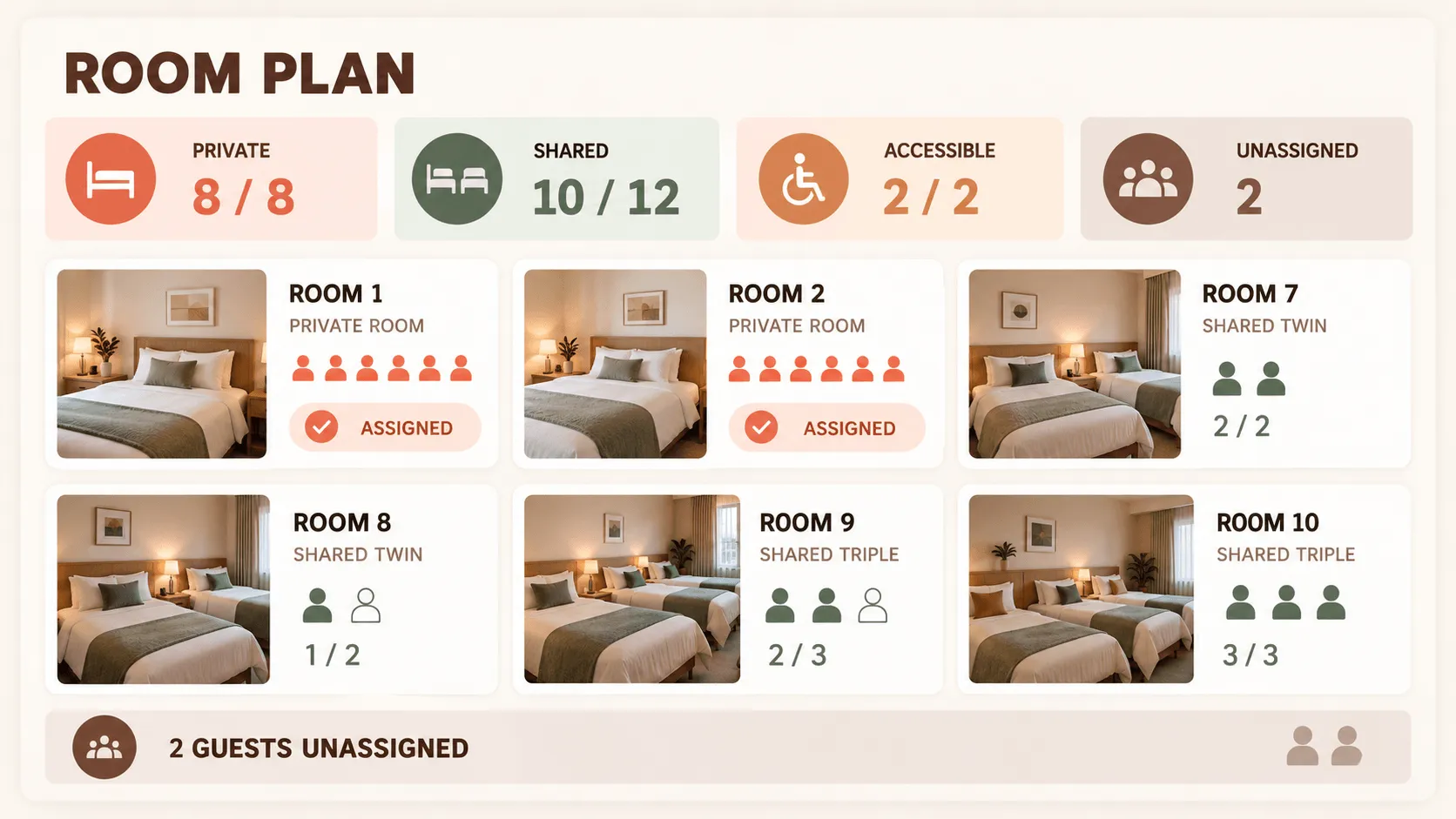
A headline guest count is not enough to plan accommodation. Confirm how many attendees need private rooms, who can share, whether couples or colleagues will room together, which guests have accessibility requirements and whether anyone has different arrival or departure dates. Set a final rooming deadline so the plan stops changing at the last minute.
This is where corporate retreat planning can become operationally messy. A group of 24 people does not necessarily mean 24 beds allocated in the same way. The mix of single occupancy, shared rooms and special requirements affects capacity, price and availability.
If rooms, guest names and availability live in different forms and spreadsheets, small changes become harder to track. A dedicated retreat booking software workflow can keep those moving parts connected. Gather supports shared and private inventory, occupancy-based pricing and guest assignments through retreat room bookings.
Collect accessibility, dietary and other relevant attendee requirements early enough for them to influence room allocation and the wider retreat plan. Do not wait until the final arrival email to discover that the rooming setup needs to change.
4. Choose activities around the retreat objective
Choose corporate retreat activities by working backwards from the objective. Strategy, team connection, recovery and creative thinking call for different formats. The strongest programme is not the one with the longest activity list. It is the one where each scheduled element has a clear reason to be there.
A strategy-led retreat might need focused working blocks with lighter activities afterwards. A group prioritising connection may benefit from more shared meals and collaborative sessions. A recovery-focused retreat may require more unstructured time and fewer compulsory activities.
Ability, accessibility and optional participation matter too. Avoid building a programme where one physical activity becomes the central social experience if some attendees cannot or do not want to join. Offsite's retreat agenda guidance also recommends balancing purposeful programming, transitions and genuine free time according to the retreat's goal.
5. Build a schedule with enough breathing room
A workable corporate retreat schedule needs arrival time, orientation, meals, focused sessions, activities, downtime and departure logistics. Leave enough space between them for people to move, reset and deal with delays. Filling every hour can make a retreat look productive on paper while making it harder to run in practice.
Start with the fixed points. Add check-in, meals, facilitator sessions, booked activities and transport. Then look at the gaps. Guests may need time to change rooms, collect equipment, make a call, get a drink or simply stop talking to colleagues for half an hour.
Transition time is part of the schedule, not wasted space. Corporate event guidance recommends allowing enough time between sessions to absorb movement, delays and technical issues. A calmer programme also gives the host more flexibility when lunch runs late or an activity takes longer than planned.
6. Create one system for corporate retreat guest management
Corporate retreat guest management works best when the company contact and individual attendees have clearly defined roles. Establish who approves the booking, then collect names, contact details, dietary needs, room preferences, accessibility information, required forms and waivers from the people actually attending. Set deadlines and keep one source of truth.
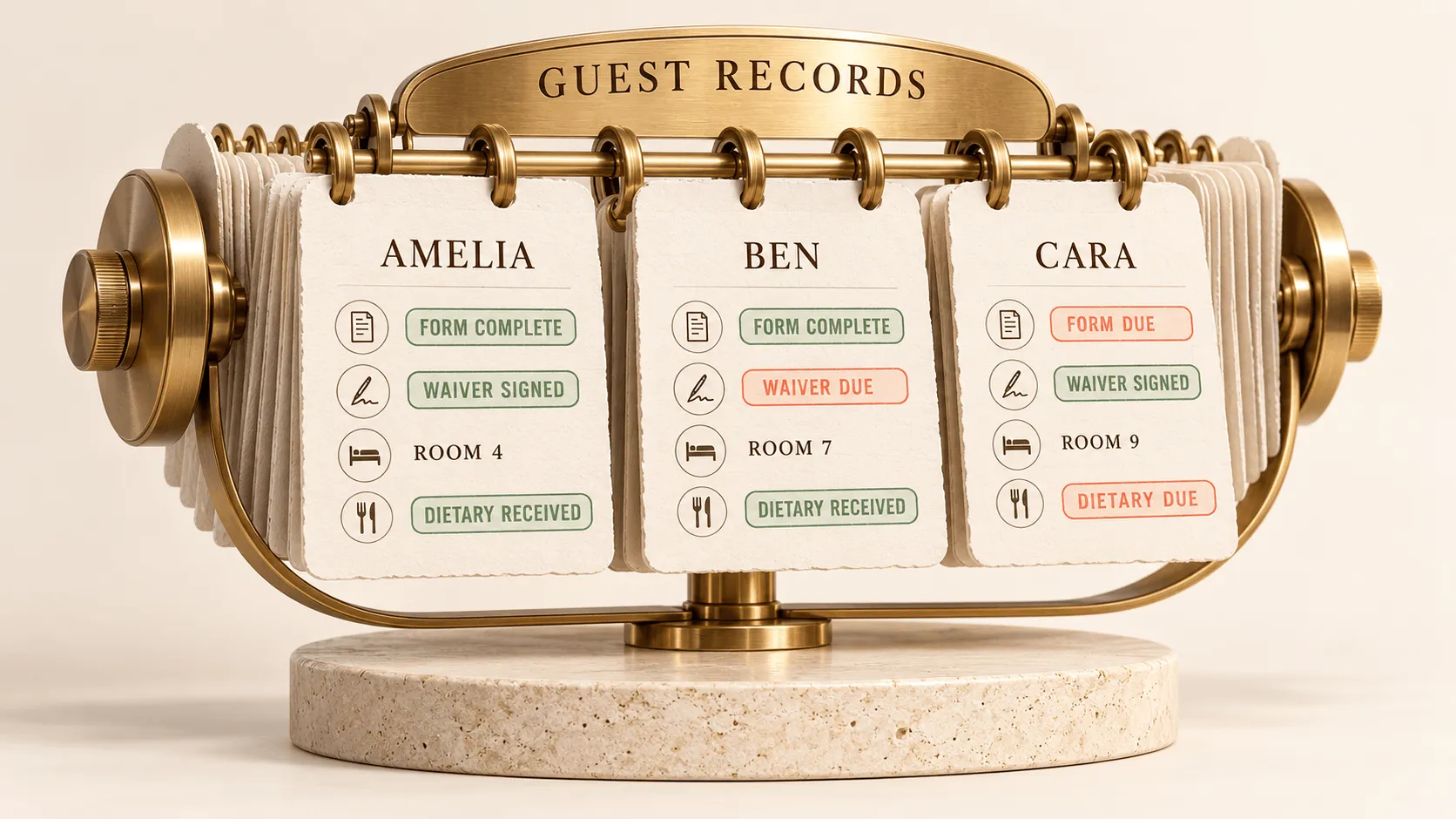
The company contact may confirm the group, but they should not have to act as the messenger for every dietary requirement, room preference or missing form. Give individual attendees a clear route to provide the information you need.
Avoid collecting one set of details through email, another through a spreadsheet and another through a separate waiver tool. That makes it harder to know which record is current. Booking software for hosts can bring dates, rooms, deposits, waivers and guest information into the same operating process.
Gather Software includes CRM and guest management, waivers and guest intake, plus a guest portal for forms, trip documents and balances. The benefit is not collecting more information. It is knowing where the current information lives and what is still outstanding.
7. Decide how bookings, deposits and balances will work
Decide the payment workflow before money starts moving. Confirm whether the company will pay for the whole retreat, whether individual attendees will pay any portion themselves, what deposit is required, when balances are due and what cancellation terms apply. There is no single model that fits every corporate group.
The right structure depends on the agreement between the host and the company. One client may want a single invoice. Another may cover accommodation while attendees pay for optional extras. Whatever the arrangement, define responsibility and deadlines before bookings open.
Gather supports bookings, payments, deposits and payment plans. If you are comparing the operating cost of the system with the way you currently collect bookings, the published Gather pricing explains the Software fee structure.
8. Set a communication timeline before guests arrive
Set the communication timeline before you start sending individual updates. Plan when guests will receive confirmation, when attendee information is due, when payment reminders go out and when you will send packing guidance, travel information, the itinerary, arrival instructions and any final changes.
This prevents the weeks before arrival becoming a chain of repeated questions. Guests should know what you need from them, when you need it and where to find the latest information.
Work backwards from arrival. Confirm room arrangements, meals and dietary requirements, transport, meeting-space needs and guest communication before the final week. If something changes, update the source of truth first, then send the relevant message rather than creating a second version of the plan in an email thread.
Company retreat checklist: final checks before arrival
Use the final week to confirm the operational details already agreed rather than introducing new decisions. A simple company retreat checklist can help you spot missing information while there is still time to fix it.
Confirm final client sign-off and the agreed retreat objective.
Lock the guest list and final headcount.
Complete private and shared room assignments.
Confirm dietary and accessibility requirements.
Check deposits, balances and any outstanding payments.
Confirm forms and required waivers are complete.
Reconfirm facilitators, activities and meeting spaces.
Check transport and arrival arrangements.
Issue the final itinerary and practical information.
Send arrival instructions and any last-minute updates.
The aim is not to create another large planning document. It is to verify that the decisions already made about guests, rooms, money, activities and communication are reflected in the final operating plan.
Run corporate retreats without rebuilding your systems every time
A corporate retreat becomes harder to run when room assignments, guest details, forms, payments and communications live in separate tools. For independent retreat hosts and smaller retreat centres running repeat company groups, Gather Software brings that operational layer together. Dates, rooms and booking can sit alongside payments, deposits, payment plans, guest management, waivers, intake and a guest portal in one branded platform. The goal is a repeatable process you can use again, rather than a new collection of spreadsheets, forms and payment links for every company.
See how that could fit your own corporate-retreat workflow. Book a call.
Frequently Asked Questions
See where you are leaving bookings on the table
Book a call and we will tell you honestly whether Gather fits, and what to use if it does not.